Virtual Sports in Brazil: Key Takeaways from CGS Recife 2026
Virtual Sports in Brazil: Insights from CGS Recife 2026
Kiron joined operators, suppliers and industry leaders at CGS Recife 2026 to discuss the evolving Brazilian gaming market and the growing role of Virtual Sports.
CGS Recife 2026 brought together operators, suppliers, technology businesses and industry experts on 24 and 25 August to discuss some of the biggest opportunities and challenges facing the market. Kiron joined the conversation both on the show floor and on stage, represented by Daniele Alves, Account Manager, and Eliane Nunes, Business Development Advisor, also Head of Revenue & Commercial Growth at Atucha Strategic Advisory.
On stage
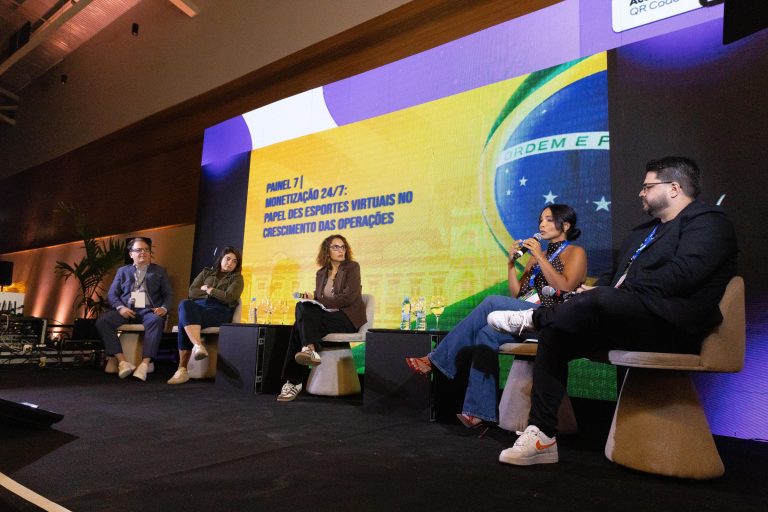
The organisers invited Kiron to lead a panel on Virtual Sports, "Monetization 24/7: The Role of Virtual Sports in the Growth of Operations", and we were glad to take it on. It was a valuable opportunity to open up a vertical that remains underused in Brazil and across Latin America. Daniele Alves was joined by Natalia Aquino, Casino Manager at Esportes Gaming Brasil, Matheus Leal, Commercial Director Brazil at FIRST, and Heitor Leal, Business Development Manager at NGX, with Eliane Nunes moderating. Four points stood out.
What the product actually is
Daniele Alves described Virtual Sports as the best of both worlds: the experience of a sportsbook with the speed of a casino, available around the clock and with instant results. She also made the case that placement decides performance. "You can have gold dust, but if it is hidden under the mattress, it will not earn you anything." One European partner now generates 43% share of its revenue in Brazil with no major campaign behind it, simply because the games are well positioned and players understand what they are clicking on.
Predictability, not only coverage
Matheus Leal brought the sportsbook perspective. Virtual Sports complement the 90 minutes of a football match and the quieter stretches of the calendar, but they also carry a more predictable operational profile, with less trading exposure and tighter control than live events. He also sees them as a route to bring casino players closer to sports betting in a market where casino carries so much weight and also controversy.
Technology should not be the limit
Heitor Leal argued that an operator's technology partner has to be agnostic, so that multiple integrations can coexist. A modular platform lets the operator position content where its own strategy calls for it, in the casino lobby or on the sportsbook page, through an iframe and regardless of which sportsbook platform the operator runs.
Freedom of choice for the operator
Natalia Aquino said Brazilian casino teams have spent years looking for a product that genuinely connects sportsbook and casino audiences and that Virtual Sports fill that role with the security of certified RNG on both sides. She was direct about partners that restrict what an operator can offer: "If you limit me, I will not do business with you." Confidence in your own product means expanding your client's options, not narrowing them.
Beyond the show floor
The two days of the event were part of a longer trip. Over the following days we visited operators and platform providers at their own offices across the Northeast, from Recife to the interior of Pernambuco and Paraíba.
Three things were consistent. Regional operations are larger and more structured than the market tends to assume. The question has moved on from whether an operator carries Virtual Sports to where the content sits and how players find it. And affiliates came up repeatedly not only as an underused channel for promoting the vertical, but a demanding one.
Brazil on its own terms
Sport is deeply embedded in Brazilian culture and mobile entertainment is already part of everyday behaviour for millions of people. But a strong sporting culture does not mean that every product will automatically resonate. Experiences need to work naturally on mobile, be straightforward to understand and give operators enough flexibility to decide how they are presented. That makes localisation about much more than language.
Virtual Sports were only one part of a much wider conversation. Regulation, taxation, legal certainty, responsible gaming and the illegal market featured throughout the two days, with operators considering how they differentiate their platforms for Brazilian audiences.
Our thanks go to the organisers for the invitation. After two days at CGS Recife and a week across the region, it was good to see Virtual Sports firmly part of the conversation about what comes next. The highlights of the panel, that was held in Portuguese Language, will be published shortly, with English and Spanish subtitles.