AI in iGaming - How iGaming Leaders are ACTUALLY Using AI
Artificial intelligence is becoming part of the everyday operating model across iGaming, with businesses using it to improve workflows, support decision making and strengthen the customer experience. In a recent iGaming News round table, industry leaders shared how they are applying AI in practice, where it is delivering value and what its wider adoption could mean for the sector. Below, we share Kiron Interactive’s contribution to the discussion.
Please introduce yourself. Tell us about your role, your company, and how AI fits into your day to day responsibilities.
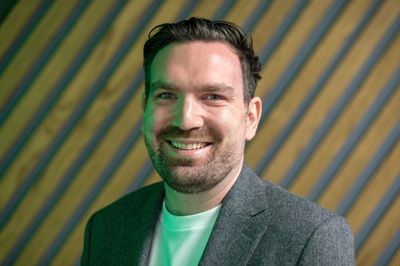
My name is Patrick Eriksen and I head up the marketing team at Kiron Interactive, a virtual sports provider. I manage our team that handles everything from brand, product marketing and PR to events, customer marketing and sales support.
Before joining Kiron, I worked for a data and AI firm and have a background in software development, so I'm comfortable using technology to solve unique business challenges. AI fits, to some degree at least, into every part of my role nowadays. Whether that's analysing data, prototyping ideas or producing reports, there's very little I'll do without at least getting AI's opinion or insight. I'm essentially a marketer with a technical background who refuses to accept that there isn't a smarter way to work.
AI has evolved incredibly quickly over the past few years. Has there been a moment, use case or capability that genuinely surprised you or changed the way you think about artificial intelligence in business?
The biggest shift for us over the last year has been to start using AI to build the tools we need, rather than treating AI as the tool itself.
We've used AI to replace many of our existing marketing and sales tools, while also building entirely new applications from scratch. It's shifted the way we think about work in general. As a marketing team, we've learned not to accept mediocre processes and tools. We don't waste time using tedious or badly designed software anymore. If something is taking longer than it should, we rebuild it in a way that fits how we prefer to work.
When a marketing process becomes a bottleneck, we look to re engineer it rather than work around it.
How is your company using AI today? Which AI tools, platforms or technologies are you actively using, and what measurable benefits have they delivered for your business, customers or internal operations?
I'll speak at a high level about some of the internal tooling we've developed.
We've built tools across the full span of what the marketing and sales teams touch. That includes a proposal and contract generator, a regulatory radar that monitors news across jurisdictions, a go to market kit builder, a PR and events planner and much more. Each one has replaced something that used to live in an inbox or spreadsheet.
The real power comes when these tools start talking to each other.
Our Game Coverage tool tells us which games are performing in which markets. Our Co Marketing tool tells us what's happening in store, right down to which posters are on the wall. Our Certifications Tracker shows where we're licensed to offer specific products, while our Events Tracker tells us which industry leaders will be attending upcoming events.
By the time we meet with a prospective partner, we already know what's performing, what we're licensed to offer and the most relevant information to put in front of them.
Importantly, this doesn't work for just one opportunity. It allows us to do this across more than 50 prospective customers at the same time.
Has AI influenced your company's product or business strategy? Can you share any AI powered products, features or initiatives you've launched recently, or are planning to introduce over the coming months?
I'm excited to roll out a new onboarding and KYC process that moves us away from the one thing I hate most: email.
Onboarding is such an important touchpoint. It's the first real experience a customer has of working with Kiron, and I want that experience to feel easy from the very first click.
Strategically, there's a quote from Tom Bedor that I think about often: "If you are requesting human attention, demonstrate human effort."
That principle has influenced much of what we produce as a team. AI generated content absolutely has a place. But if we're asking someone, whether that's a customer, prospect or colleague, to spend time reading something, the least we can do is make sure it feels like we spent time creating it.
Looking ahead, what role do you see AI playing in the future of iGaming? How do you expect artificial intelligence to transform the industry over the next three to five years, and where do you believe the biggest opportunities still lie?
I love what we've been able to do with AI, but I think the gaming industry would be naive to treat it as just another productivity tool. It's going to shake the foundations of any business whose main advantage has simply been being able to build the thing.
I might get some heat for this, but I don't think there's anything fundamentally very complicated about building most casino games. Three years in AI development is an eternity. Three years ago, Claude had only just launched. Today it's visualising proteins. Three years from now, AI could recreate almost any game it's shown in a fraction of the time it takes to build today.
And I don't think that'll only apply to slots. Nothing is immune. Not virtuals, not platforms, not marketing tools and not even live dealer.
Certification, regulation and intellectual property will still matter. They'll continue to create barriers to entry. But this industry already has no shortage of copycat games. AI will simply make them easier to produce while also accelerating code annotation, compliance preparation and the development of new mechanics.
For me, the biggest opportunity isn't AI itself. AI is becoming table stakes. The real opportunity is everything AI can't do.
AI might help create a product, build a better presentation or write a perfect email. But a perfect email is still just an email. None of that replaces the way humans make other humans feel.
That's the part I think companies need to take seriously.
Invest in the tools, certainly. But invest just as much in the people around them. The people who make working with your business enjoyable. The people who pick up the phone. The people who can have the difficult conversations. The people who understand that AI can help them do the work, but can't be accountable for it.
Because when the tools become a given, the people become the difference.
*You can read the full feature on iGaming News.